Discerning AI
by Chris Chatteris SJ
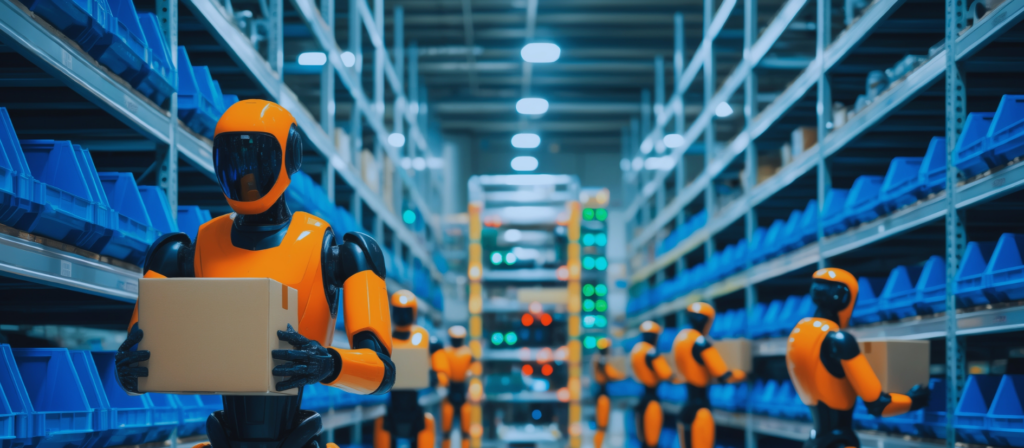
In China, they recently held a humanoid robots’ Olympics in which one sprint-bot beat the human 100 metres world record. Some humanoid robots did some quite impressive break-dancing. Others competed in the high and long jumps.
In one arena, two robots fought each other in a kickboxing bout. One kicked the head off the other, but the headless one went on to win the fight! The crowd loved it–a gladiatorial contest without the shedding of blood. Perhaps it’s a glimpse into the ‘brave new world’ of AI and how human beings will be served and entertained by these incredibly complex and clever machines.
Can Ignatian discernment be of service here? Maybe, but it won’t be easy. For one thing, Ignatian discernment assumes we know what we’re discerning about, and things are moving so fast that we really don’t know what these technologies will be capable of. Even those creating them often seem unsure. We have to rely on a general sense of the direction that they might take.
Some things are clear. One is that they will take up a lot of space. Data centres are vast structures, and vast structures are not ‘virtual ’; they gobble up land. Could that land be put to better use?
Another thing that we know is that they will delay the transition to green energy. The fossil fuel industry sees AI, which requires huge amounts of electricity, as a lifeline, a way to prolong their dwindling share of the energy market.
Another area of clarity is the kind of product AI can churn out. We know about this because we are already seeing it. On the positive end, we have seen AI produce quite sublime pieces of writing, drawing on the genius of a host of human writers, living and dead. On the low end, we have ‘AI slop’, for example those awful YouTube presentations on historical topics in which the voice is clearly a robot’s and the illustrations are cheesy and riddled with anachronisms.
We also know from history that, at least in the shorter term, automation destroys jobs and in this case those jobs are not just going to be those of manual workers. There are already examples of IT workers ‘automating themselves out of a job ’, as the commentator Naomi Klein puts it.
We also know that a huge issue with every new technology is who controls it, and in this case it will involve control of information; so the discernment is whether a particular AI technology will serve the common good or the good of a super-wealthy elite.
Which leads to perhaps the most important discernment we need to make, namely around the character of those who are creating and controlling these technologies and thereby shaping our world. Here we are on familiar ground, and we can ask the usual questions: ‘Whose needs are being met in all this?’ ‘Do I trust these men (mostly men) to have our best interests at heart?’ ‘What ideologies do these ‘tech-bros’ subscribe to?’ And why do we call these remote individuals ‘bros’ anyway?
All in all, the world faces probably the greatest task of discernment since the dawn of the machine age. I do think that St Ignatius would want Ignatians to apply his Rules for the Discernment of Spirits to something so critical.